


What is an Atomic Force Microscope (AFM)?
Atomic Force Microscope (AFM), full form as Atomic Force Microscopy, is a scanning probe microscope that images surfaces by measuring forces between a sharp probe tip and sample atoms. Invented in 1986, it beats light microscope limits (200 nm diffraction barrier) with sub-nanometer resolution. Keysight Atomic Force Microscope (Keysight AFM) from Keysight Technologies uses this tech for labs studying nanomaterials, biotech, and semiconductors.
How Does Keysight AFM Work?
A cantilever holds a razor tip (10-50 nm radius). Piezo scanners move it over the sample in an X-Y raster. Van der Waals or electrostatic forces bend the cantilever. A laser reflects to a photodetector, turning deflection into voltage. Feedback loop keeps constant force/amplitude, building 3D maps. Modes: Contact (constant touch), Tapping (oscillate/tap for soft samples), Non-Contact (hover for fragile).
What Are the Key Features of Keysight AFM?
Models like 5500, 7500, 9500 pack closed-loop XY scanners (90 µm range), Z up to 15 µm, noise <5 Å. MAC Mode (Magnetic AC Mode) images in fluids. Electrochemistry AFM does in-liquid voltammetry for batteries. Zoom AFM shifts wide-to-atomic views seamlessly. Add-ons: fluid cells, heaters, inert gas chambers. Software automates navigation, data analysis.
How is Keysight AFM Used?
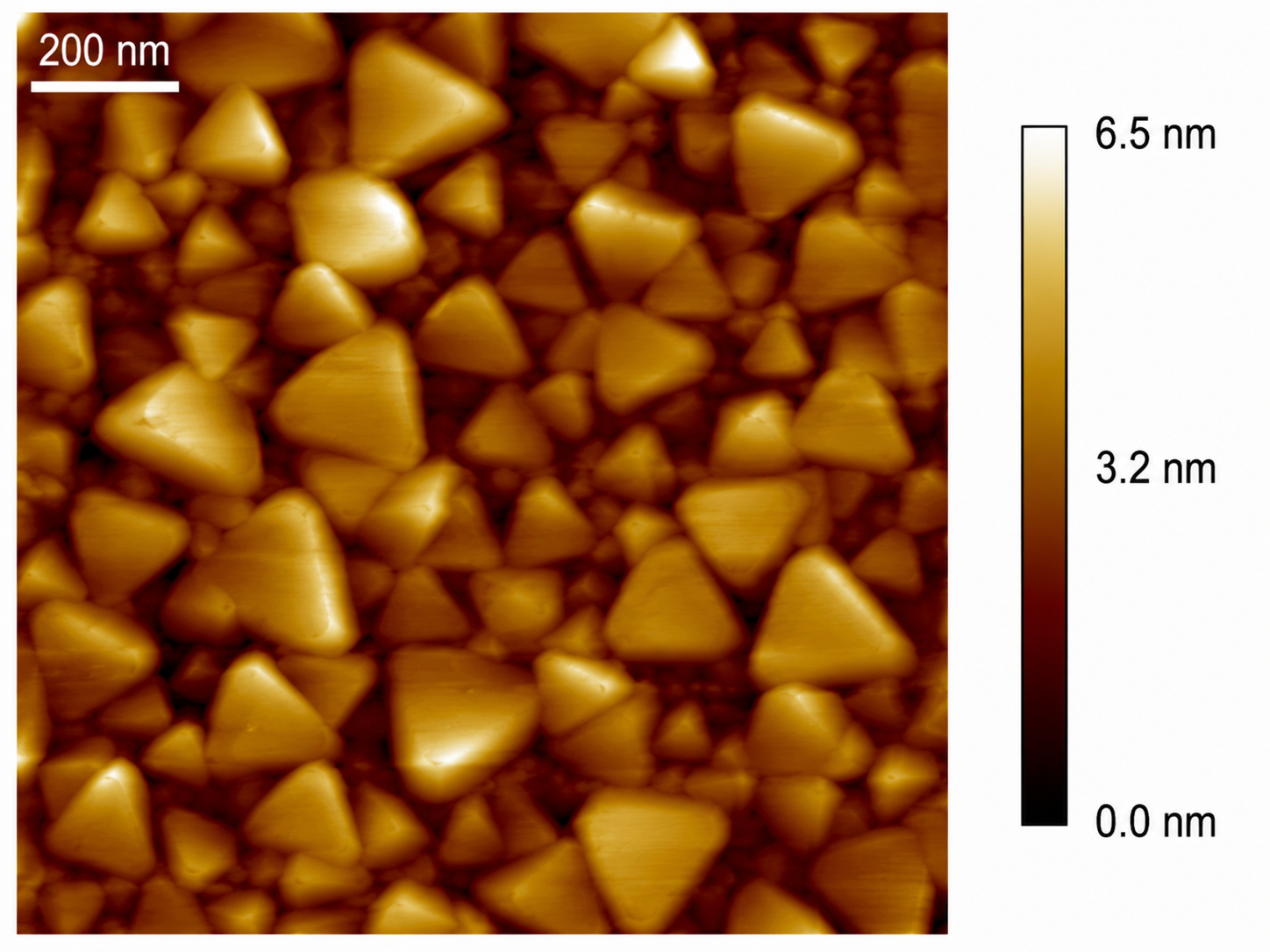
Topography (height maps), phase (material contrast), force curves (stiffness/adhesion). Advanced: EFM (Electric Force Microscopy) for charge, MFM (Magnetic Force Microscopy) for domains, PFM (Piezoresponse Force Microscopy) for piezo, SMM (Scanning Microwave Microscopy) for conductivity. Semicon: wafer defects. Biotech: cell mechanics. Materials: polymer blends.
Role of Molecular Imaging in Keysight AFM
Molecular Imaging upgrades legacy Keysight AFM via PicoPlus platform. They swap heads, add low-noise loops, Electrochemistry AFM/SPM, and isolation chambers for O2-free tests. Supports Zoom AFM, multi-frequency. Fixes fast, trains users. Turns old 5500 into a modern rig, cheap – labs save big vs new buys.
Why Keysight AFM Matters Today
Bridges structure-function at the nano. Keysight’s modularity + Molecular Imaging tweaks keep it relevant. Electrochemistry AFM watches corrosion live; Zoom AFM speeds workflows. From chip fabs to drug design, it’s core for innovation.
Conclusion
Keysight Atomic Force Microscope tactilely reveals the atomic world. With Molecular Imaging support, Keysight AFM remains a powerhouse for Electrochemistry AFM, Zoom AFM needs. Labs worldwide rely on it.
FAQs
What exactly is the resolution capability of a Keysight AFM?
Keysight AFMs achieve sub-angstrom lateral resolution (typically <0.1 nm) and vertical resolution down to 0.2 nm, enabling atomic-scale imaging of crystal lattices and molecular structures through low-noise closed-loop scanners and sharp tips.
How does Electrochemistry AFM differ from standard AFM modes?
Electrochemistry AFM combines AFM topography with electrochemical measurements like cyclic voltammetry, using a bipotentiostat to apply voltages and measure currents at the nanoscale, ideal for studying battery electrodes, corrosion processes, and surface reactivity in liquid environments.
What is Zoom AFM and why is it useful?
Zoom AFM refers to the ability to dynamically adjust scan sizes from large fields (e.g., 100 µm) to atomic resolution (e.g., 1 nm) without repositioning, speeding up workflows by allowing quick navigation from overview to detail in heterogeneous samples like thin films or biological tissues.
Can Keysight AFMs operate in liquid or controlled environments?
Yes, with fluid cells and environmental chambers, Keysight AFMs support imaging in liquids (for bio-samples), controlled humidity, elevated temperatures (up to 300°C), and inert gases, using modes like MAC Mode to minimize capillary forces and maintain stability.
How does Molecular Imaging support older Keysight AFM systems?
Molecular Imaging provides modular upgrades via PicoPlus, including new controllers, low-noise mechanics, advanced modes like Electrochemistry AFM, and custom integrations, plus repair services and training to extend legacy systems’ usability at a fraction of new equipment costs.
Post a comment
Related Posts
May 15, 2026
Why High Quality AFM Data Matters for Your Research
Modern research environments demand more than visually impressive nanoscale images. Researchers working in nanotechnology, semiconductor…