


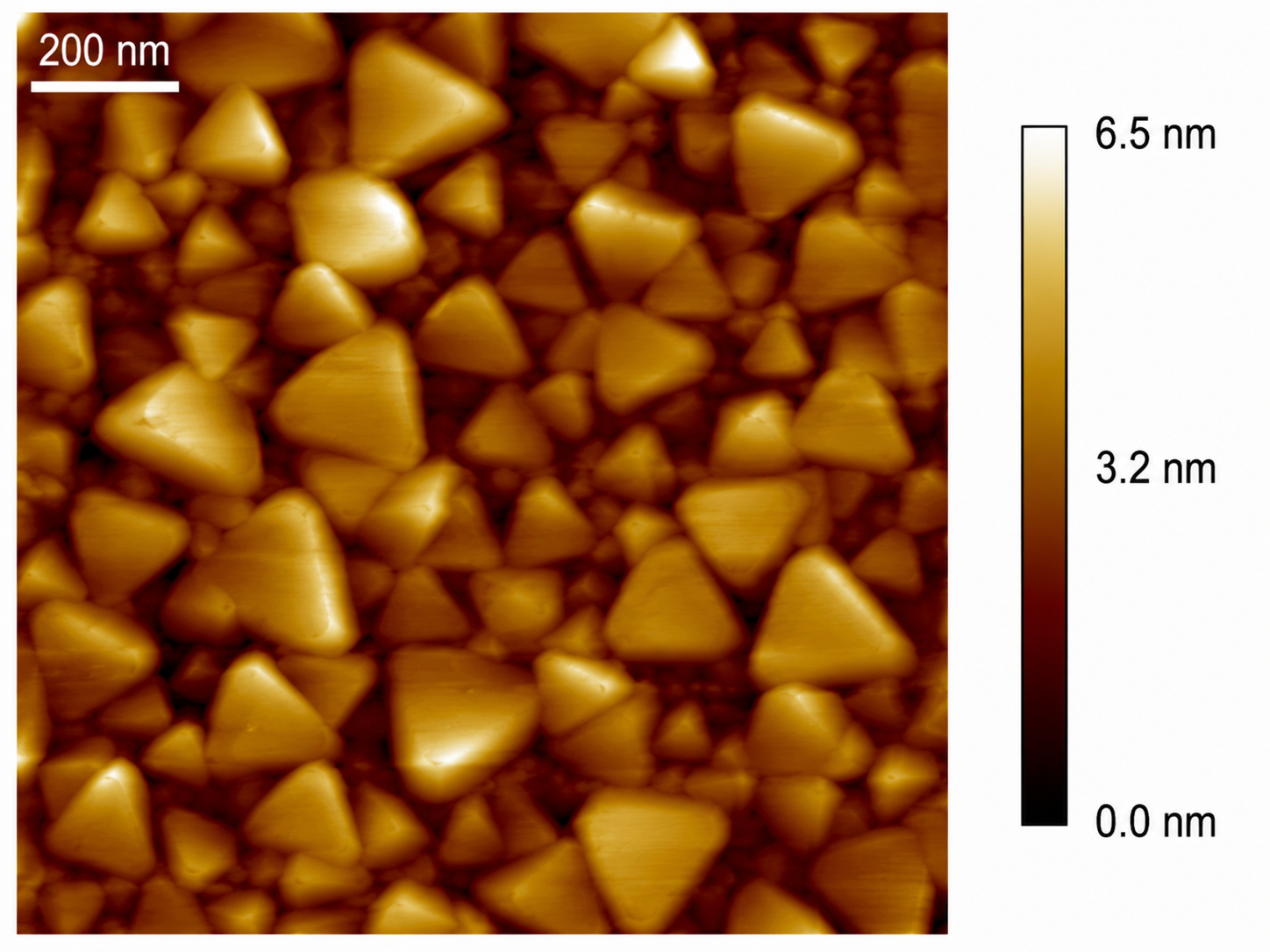
Modern research environments demand more than visually impressive nanoscale images. Researchers working in nanotechnology, semiconductor development, electrochemistry, biotechnology, and advanced materials science require data that is reproducible, quantitative, and scientifically reliable. Poor imaging quality, signal noise, thermal drift, or surface artifacts can compromise months of experimental work and weaken the credibility of published results.
This is why high-quality Atomic Force Microscopy data plays such a critical role in advanced scientific research. Accurate AFM imaging allows researchers to study nanoscale structures, surface mechanics, and molecular interactions with confidence while preserving delicate samples in their native state.
At Molecular Imaging, the focus is not simply on providing instrumentation, but on supporting long-term scientific outcomes through stable, customizable, and research-driven AFM solutions.
Accurate Nanoscale Quantification Drives Better Research Outcomes
For many research applications, nanoscale accuracy directly determines whether experimental conclusions are valid. High-quality AFM data enable precise measurement of surface roughness, nanoparticle distribution, grain boundaries, step heights, and thin-film morphology. Unlike traditional imaging methods that may only provide two-dimensional contrast, AFM delivers detailed three-dimensional topographical information that supports quantitative surface analysis.
This level of precision is especially important in materials science and semiconductor research, where nanoscale structural variations can significantly impact conductivity, adhesion, durability, or device performance. Reliable data allows researchers to identify subtle defects, analyze surface evolution, and compare experimental results across multiple studies with greater consistency.
Strong Atomic Force Microscopy Resolution also reduces uncertainty during analysis. Low-noise imaging and stable environmental conditions help researchers separate true sample features from imaging artifacts caused by vibration, thermal instability, or probe contamination. This improves confidence in both experimental interpretation and publication-quality data.
Research laboratories looking to improve advanced nanoscale characterization workflows often benefit from customizable systems and application-focused support available through Molecular Imaging AFM solutions.
Why Biological and Soft Matter Research Depends on High-Quality AFM Data
Imaging Samples in Their Native Environment
Biological and soft matter research presents unique imaging challenges because many samples are highly sensitive to environmental changes and aggressive preparation techniques. Proteins, DNA, lipid membranes, hydrogels, and living cells can easily become damaged during conventional imaging processes. AFM offers a major advantage because it allows researchers to image these materials in liquid environments without conductive coatings or destructive sample preparation.
This capability is particularly important for researchers studying molecular interactions, cell mechanics, or biomaterial behavior under physiologically relevant conditions. High-quality imaging allows scientists to observe biological processes at nanometer resolution while preserving the natural structure of the sample.
Advanced High Resolution Atomic Force Microscopy systems also support live-cell imaging and force spectroscopy applications, enabling researchers to study adhesion forces, elasticity, and biomolecular interactions with exceptional sensitivity. In cancer research, for example, nanomechanical mapping can help distinguish healthy cells from diseased cells by analyzing differences in stiffness and surface behavior.
Reliable Nanomechanical Mapping for Advanced Analysis
Modern AFM systems extend beyond topographical imaging by allowing researchers to map local mechanical properties such as adhesion, elasticity, stiffness, and viscoelasticity. These measurements are increasingly valuable in tissue engineering, biomaterials development, and molecular biology research.
However, accurate nanomechanical analysis depends heavily on imaging stability and proper environmental control. Small fluctuations in vibration, temperature, or tip-sample interaction can introduce significant errors into force measurements. High-quality AFM platforms reduce these challenges through advanced feedback systems, low-noise electronics, and stable mechanical design.
Researchers conducting sensitive biological experiments often prioritize modular AFM systems capable of supporting fluid imaging, environmental control, and multiple force measurement techniques within a single platform.
The Importance of Low Noise and Experimental Stability
Reducing Artifacts and Improving Data Reliability
One of the most common problems in AFM research is the presence of imaging artifacts caused by thermal drift, tip wear, acoustic interference, or unstable scanning conditions. These artifacts can distort nanoscale structures and produce misleading results that compromise experimental accuracy.
High-quality AFM data depends on minimizing these sources of error through stable instrumentation and optimized imaging conditions. Proper vibration isolation, environmental control, and advanced signal processing help researchers maintain clean, reproducible datasets even during long experimental sessions.
Platforms such as those supported by Molecular Imaging research systems emphasize long-term imaging stability and flexibility because advanced research often requires highly controlled experimental environments. This is especially important for electrochemical analysis, semiconductor characterization, and molecular-scale investigations, where even minor instability can affect the final results.
Improving Throughput Without Sacrificing Accuracy
Research laboratories today are under increasing pressure to generate larger datasets while maintaining scientific rigor. High-speed imaging and advanced data processing tools allow researchers to collect statistically meaningful data more efficiently without compromising resolution or measurement quality.
Modern AFM workflows also integrate advanced software processing techniques capable of reducing noise, correcting artifacts, and sharpening image detail. Improved processing not only enhances visual clarity but also strengthens quantitative analysis for publication and collaborative research projects.
The ability to acquire reliable datasets more quickly helps research teams improve productivity while maintaining confidence in the reproducibility of their work.
How Modular AFM Systems Improve Research Flexibility
Different research applications require different imaging conditions, force measurement capabilities, and environmental controls. A fixed system architecture may limit future experimental possibilities, particularly in multidisciplinary laboratories where research priorities evolve over time.
This is why modular AFM systems have become increasingly valuable in advanced scientific environments. Flexible platforms allow researchers to integrate fluid imaging, electrochemical analysis, spectroscopy, environmental chambers, and multiple operational modes within a single system. This adaptability supports long-term scalability while reducing the need for entirely separate instruments.
The broader field of Scanning Probe Microscopy continues evolving as researchers demand more multifunctional and customizable analytical platforms. Laboratories working across materials science, electrochemistry, and nanotechnology increasingly benefit from systems capable of supporting multiple experimental workflows without sacrificing performance or stability.
Reliable technical guidance and ongoing system optimization also play a critical role in maintaining research efficiency. Access to experienced application support and specialized AFM Service capabilities helps laboratories minimize downtime while improving long-term experimental consistency.
Ready to Strengthen Your AFM Research Workflow?
Explore advanced AFM technologies, modular research platforms, and application-focused support from Molecular Imaging. Whether your work focuses on life sciences, nanotechnology, materials characterization, or semiconductor research, the right AFM solution can help improve data quality, reproducibility, and long-term research performance.
Conclusion
Atomic Force Microscopy plays a critical role in modern scientific research by enabling accurate nanoscale characterization, reproducible measurements, and high-resolution surface analysis.
From biological imaging and nanomechanical mapping to semiconductor characterization and electrochemical analysis, reliable AFM data supports stronger scientific conclusions and more dependable experimental workflows.
Advanced research environments require stable instrumentation, low-noise performance, environmental flexibility, and application-focused support. By combining modular system architecture with high-resolution imaging capabilities, Molecular Imaging helps researchers improve data quality, expand experimental capabilities, and support long-term scientific innovation.
Frequently Asked Questions About Atomic Force Microscopy
What is Atomic Force Microscopy used for?
Atomic Force Microscopy is used to analyze surfaces at the nanoscale. Researchers use AFM for surface characterization, nanomechanical mapping, semiconductor analysis, biomolecular imaging, and materials science research.
Why is Atomic Force Microscopy important in scientific research?
Atomic Force Microscopy provides high-resolution, three-dimensional nanoscale imaging and quantitative surface measurements that support accurate, reproducible scientific analysis.
What affects Atomic Force Microscopy image quality?
Thermal drift, vibration, acoustic interference, unstable scanning conditions, and probe contamination can reduce AFM imaging quality and introduce artifacts into datasets.
Which industries use Atomic Force Microscopy?
AFM is widely used in:
- nanotechnology
- semiconductor research
- biotechnology
- electrochemistry
- materials science
- biomedical engineering
Why are modular AFM systems beneficial?
Modular AFM systems allow researchers to integrate multiple imaging modes, environmental controls, and analytical techniques within a single platform, improving long-term research flexibility.