


In the era of our modern science, advancements are usually achieved with the help of tools that enable us to observe and comprehend matter in a new manner we have not thought of before. One of these, the High Resolution Atomic Force Microscopy (AFM), has become one of the most potent ones, particularly in areas such as quantum studies and nanotechnology. High resolution AFM has enabled scientists to make the discoveries that are transforming the technologies of tomorrow by providing them with the capability to visualize, manipulate and measure atomic-level discoveries.
What Is High Resolution Atomic Force Microscopy (AFM)?
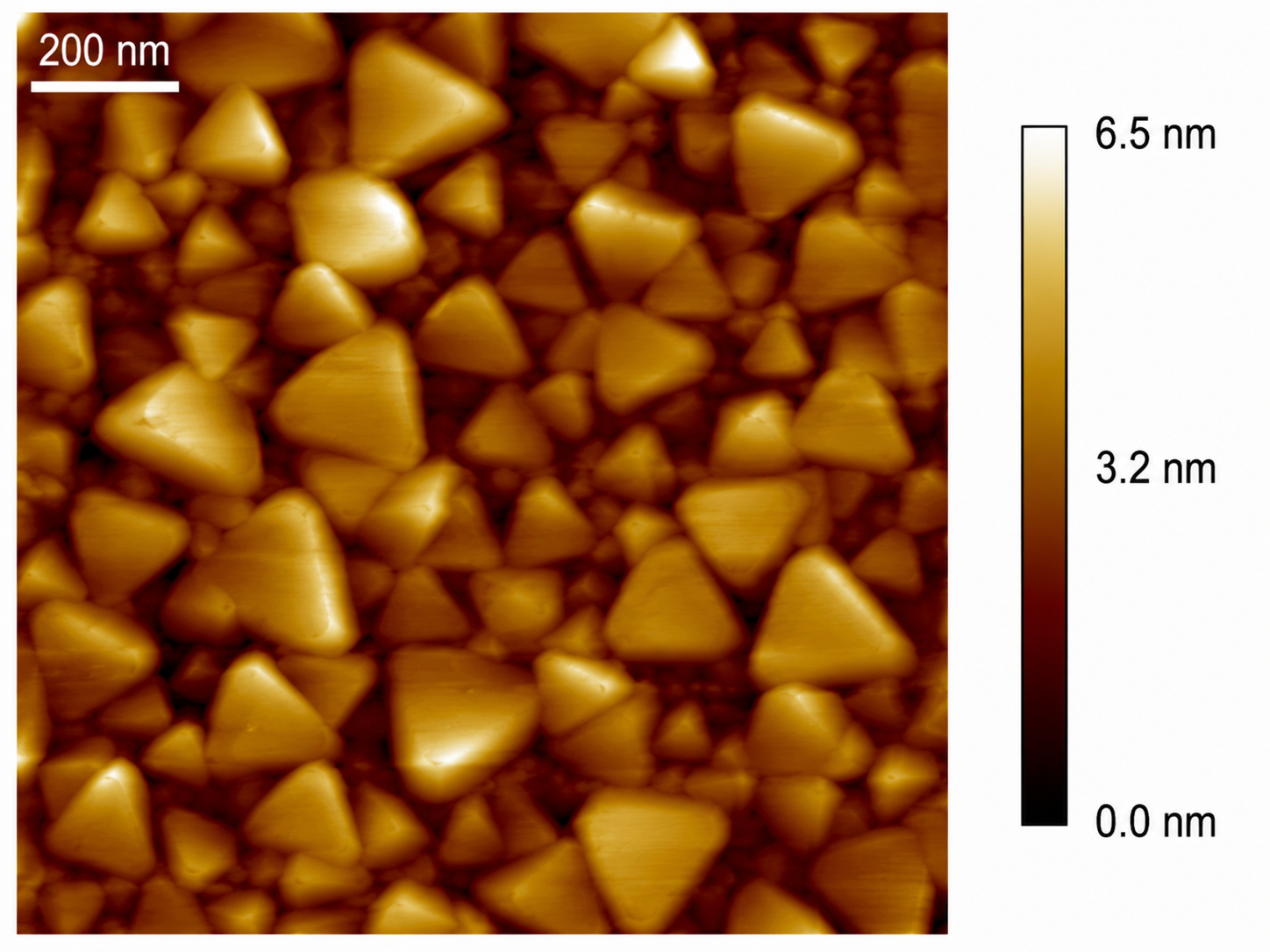
At its core, Atomic Force Microscopy is a type of Scanning Probe Microscopy that provides incredibly detailed images of surfaces, often at resolutions that go beyond traditional microscopes. What makes High Resolution Atomic Force Microscopy so critical is its ability to analyze both the topography and the mechanical properties of materials down to nanometer or even sub-nanometer levels.
In contrast to the optical or electron-based imaging techniques, AFM is based on the principle of feeling the surface using a sharp tip. This enables the scientists to analyze the appearance of a thing, as well as the behavior, reactions and interactions of the thing in various settings. AFM can also be used together with an Environmental Chamber, allowing controlled temperature, humidity or chemical experiments to be performed, and is therefore also invaluable in sensitive research applications.
Why Is AFM Essential for Quantum Research?
Precision and accuracy are of great importance in quantum research. A manipulation and observation of matter at the atomic scale is needed to study phenomena such as electron transport, spin dynamics, or quantum tunneling. High Resolution AFM offers only that.
As an example, AFM can be used to set atoms or molecules into position with astonishing precision, to generate engineered quantum states or to test quantum mechanics theory. Such applications have found favour using tools such as the Agilent Atomic Force Microscope due to its stability and high measurement requirements. The ability to study at the atomic scale gives researchers a closer understanding of the building blocks of quantum systems since these microscopes enable them to study the atomic-scale phenomena in real-time.
How Does AFM Drive Innovation in Nanotechnology?
Whereas quantum science is concerned with the laws of the tiniest particles, nanotechnology uses the knowledge to create new materials and systems. It is hard to overestimate the role of Atomic Force Microscopy in nanotechnology.
Since the concept of designing nanoscale sensors up to designing systems to deliver drugs, AFM plays a central role in the field of basic research and practical applications. AFM has enabled the creation of structures with higher precision than ever before through the provision of detailed 3D surface images and a capability to manipulate nanoparticles.
Moreover, the combination of AFM and an Environmental Chamber has provided new opportunities in nanomaterials research. Scientists can now test how nanostructures behave under extreme conditions, such as high humidity or variable temperatures, simulating real-world environments for nanodevices.
What Role Do Tools Like the Agilent Atomic Force Microscope Play?
Agilent Atomic Force Microscope is one of the devices that are highly favored among researchers because of its accuracy and high technology. They are supposed to operate critical quantum test systems and nanoscale engineering applications. They have a long-standing capability to provide high-resolution data, which is why many academic as well as industrial laboratories use them.
Having such instruments scientists are able to go to the extreme of what can be done, experimenting with new materials, controlling individual atoms and checking theories with experimental evidence.
Where Does the Environmental Chamber Enhance AFM Experiments?
An Environmental Chamber adds variety to AFM as it enables AFM experiments to be controlled. The feature is essential in the research of nanostructures or quantum materials of a sensitive quality that is sensitive to variations in humidity, pressure, or temperature.
Such as, nanodevices can be simulated in real stress conditions in the world to test their performance. This is an ability that guarantees that the materials that are being developed in electronics, medical devices or even energy systems can work effectively in the real world.
Who Benefits Most from High Resolution AFM in Research and Industry?
The uses of High Resolution Atomic Force Microscopy are applied in various fields. Research institutions are taking advantage of AFM to advance science and the industrial sector to create products at the nanoscale. From nanomedicine to semiconductor engineering, all are enjoying the provision to explore the atomic world.
Companies such as Molecular Imaging have played a leading role in providing the tools and know-how to enable researchers and businesses to exploit the potential of AFM. They are also contributing to the future of nanoscience by further developing the Scanning Probe Microscopy technologies.
What Future Does AFM Hold in Quantum and Nanotech Discoveries?
The importance of the Atomic Force Microscopy can only be enhanced as quantum research is expected to keep on improving. Combined with environmental control and advanced probe technologies, high resolution imaging will make breakthroughs in quantum device discovery and nanomedicine and materials engineering.
We are moving into a world where scientists not only observe atoms, but they design and manipulate atoms to achieve particular needs. Be it the development of energy-efficient substances, the development of quantum processors or the development of nanoscale drug carriers, High Resolution AFM will be at the center of such innovations.
Final Thought
Nanotechnology combined with quantum research is defining the scientific edge and High Resolution Atomic Force Microscopy is the prism through which most of this advancement is seen. Using tools such as the Agilent Atomic Force Microscope, scientists are revealing the mysteries of the atomic world and translating them into real world innovations.
Companies such as Molecular Imaging still remain crucial because they are supplying sophisticated tools that drive these findings. With the changing technology, AFM will be among the most significant instruments that will direct us to the future scientific and technological revolutions.
Post a comment
Related Posts
May 15, 2026
Why High Quality AFM Data Matters for Your Research
Modern research environments demand more than visually impressive nanoscale images. Researchers working in nanotechnology, semiconductor…