
A custom AFM configuration's price depends on modularity, scan modes, environmental controls, and the electronics/software package you choose. There's no single sticker price here.
This article breaks down real pricing ranges, the factors that drive cost up or down, and how to budget for a custom AFM system, including considerations for labs running Mac-based workstations.
TL;DR
- Custom AFM systems typically range from $20,000 to $300,000+
- Environmental controls, specialized modules, and multi-mode scan heads push prices toward the high end
- Teaching labs need basic setups; advanced R&D and bio-imaging groups need custom, research-grade configurations
- Payoff is strongest when your research needs multiple modes or will scale over time
How Much Does a Custom AFM Configuration Cost? (Pricing Overview)
AFM and STM systems don't come with one fixed price tag. Cost depends on the base unit, the modules you add, and how the system needs to perform for your application.
Common budgeting mistakes:
- Underbudgeting for accessories like probes, calibration samples, and liquid cells
- Choosing a configuration that can't grow with future research needs
- Overlooking service, calibration, and support costs after the warranty ends
Typical Cost Ranges
Based on published vendor pricing data, general-laboratory AFM systems fall into three broad tiers:
| Tier | Typical Range | Best For |
|---|---|---|
| Entry-level | Under $30,000 | Teaching labs, initial research setups |
| Mid-range | $30,000–$100,000 | University research labs, shared core facilities |
| High-end custom | $100,000–$300,000+ | Advanced R&D, bio-imaging, electrochemistry |

These figures come from AFMWorkshop's published price guide, which notes that systems above $100,000 are typically bought by labs that need advanced capabilities. Some manufacturers report top configurations at $500,000 or more, though those figures are broad estimates rather than firm quotes.
Entry-Level Configuration
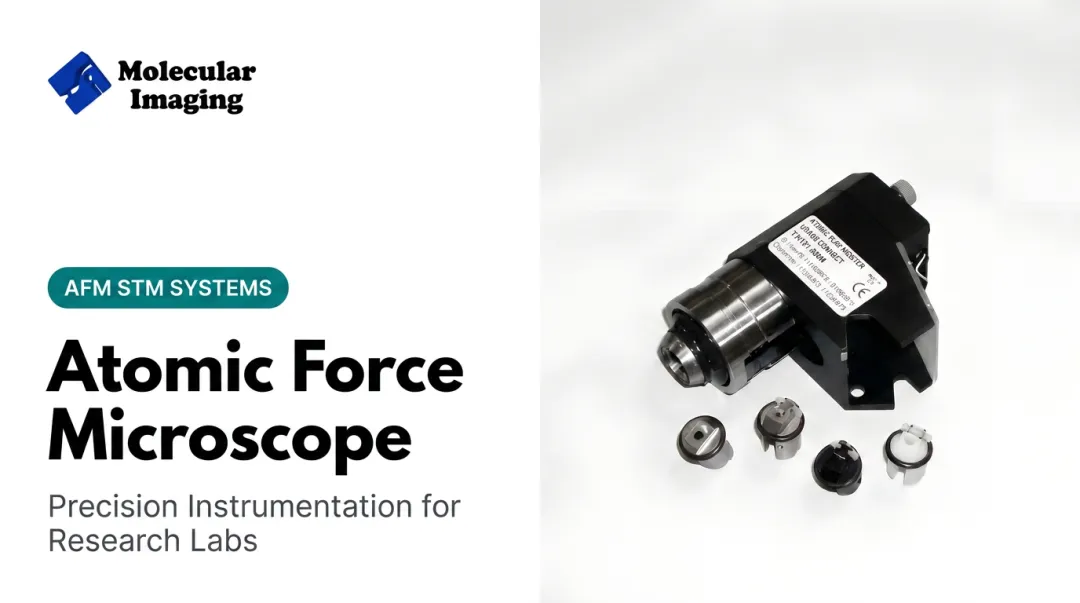
A base setup typically includes a standard scan head, a cantilever holder, and core imaging software. Molecular Imaging's platforms, for example, use a Pendulum Multipurpose Scanner with ranges from 9 µm to 90 µm, paired with PicoView software for data acquisition.
Best for: teaching labs and researchers just starting out who need reliable imaging without advanced modes.
Mid-Range Configuration
Mid-tier systems add multiple imaging modes (contact, tapping, KPFM, EFM, MFM) through interchangeable nose cones, plus upgraded electronics for better data handling.
Best for: university research labs and shared core facilities running varied projects across multiple users.
High-End Custom Configuration
High-end configurations typically include:
- Environmental isolation chambers for humidity, gas, and low-oxygen control
- Temperature-controlled stages spanning -30°C to 250°C
- BioAFM modules for liquid-environment imaging
- Electrochemistry or conductive AFM modules
Best for: advanced R&D groups, molecular electronics researchers, and bio-AFM labs working with proteins or cells in liquid.

Key Factors That Affect the Cost of a Custom AFM Configuration
AFM pricing hinges on technical specs, application requirements, and support needs. Here's what actually moves the number.
Type of AFM System and Scan Head
A standard scan head costs less than an advanced one built for multiple modes. STM-only or contact-mode-only systems tend to sit at the lower end, while multi-mode systems that switch between AFM, STM, and force measurement command a premium because of the added hardware complexity.
Level of Customization and Modularity
Off-the-shelf systems cost less than modular, application-specific builds. Molecular Imaging's product line illustrates this well: its 5500 series platform uses interchangeable nose cones to switch between AFM, STM, CSAFM, tapping mode, KPFM, EFM, and MFM without buying a new instrument.
Adding specialized modes increases cost further:
- Electrochemistry AFM for corrosion or battery research
- Conductive AFM for molecular electronics
- BioAFM for soft, liquid-environment biological samples
Environmental Control Add-Ons
Temperature-controlled stages and isolation chambers add meaningfully to the price. A patented heating/cooling anti-drift stage supporting -30°C to 250°C, for instance, is built specifically for phase-transition and thermal studies. Isolation chambers that control humidity, gas composition, and oxygen levels support battery research and reactive-gas studies, but they're a separate line item, not a bundled feature.

Electronics, Software, and Compatibility
High-performance control electronics and software packages (like PicoView, which handles 3D rendering, spectroscopy, and scripting) affect total system cost.
For Mac-based labs, that software layer matters even more. Many research groups run Mac workstations or need cross-platform integration, which can mean extra compatibility work or middleware if the vendor's native environment is Windows-only. Confirm Mac compatibility with your AFM provider before you lock in a quote—it can change both timeline and total cost.
Installation, Training, and Support
Setup and calibration aren't free add-ons; they're part of the total cost. Onboarding typically includes:
- On-site or remote installation guidance
- Scanner and controller-electronics calibration
- Access to training resources (video tutorials covering fundamentals, imaging modes, and sample prep)
Ongoing technical support and documentation also belong in the cost model. The first time you troubleshoot an unfamiliar mode, responsive support and clear manuals often matter as much as the hardware you bought.
Cost Breakdown of a Custom AFM Configuration
The total cost of ownership extends well beyond the instrument's purchase price.
| Cost Category | Type | What's Included |
|---|---|---|
| Initial system purchase | One-time | Base AFM/STM unit plus chosen modules |
| Installation & setup | One-time | On-site calibration, lab integration |
| Consumables & accessories | Recurring | Cantilevers, tips, calibration samples |
| Maintenance & repairs | Recurring/periodic | Servicing, troubleshooting, part replacement |
| Upgrades & future customization | Periodic | New modules as research evolves |

Consumables are a recurring line item after the system is installed. Molecular Imaging's web store stocks the probes and standards most labs reorder:
- Cantilevers for contact, tapping, liquid, MFM, and EFM/KFM
- STM tips
- Calibration samples such as the 500 nm grating standard
Maintenance is the other ongoing cost. Labs with aging AFM/STM systems—especially legacy Agilent-era units—can use Molecular Imaging's ZoomAFM repair and evaluation service. It covers diagnosis, calibration, part replacement, and preventive maintenance without forcing a full system swap.
Upgrades protect that investment over time. If you start on a modular platform, adding an environmental chamber, electrochemical cell, or new scanning head later does not mean replacing the whole instrument.
How to Estimate the Right Budget for Your Custom AFM Configuration
Size your budget to the research you will run and the modules those experiments actually require.
Factors to weigh:
- Applications drive module choices: materials science, bio-imaging, electrochemistry, and molecular electronics each need different hardware
- Shared core facilities running daily multi-user work need more durable platforms than single-user teaching labs
- Leave room for year-two or year-three add-ons such as new modes or environmental controls
- Confirm Mac software compatibility, lab space, and vibration isolation before you commit
Those same factors surface the budgeting mistakes labs make most often:
Common budgeting mistakes to avoid:
- Focusing on sticker price while ignoring recurring consumables (probes, tips, substrates)
- Leaving maintenance and calibration out of year-one planning
- Over-customizing beyond what current research requires
- Choosing a low-cost system without verifying long-term support availability
Conclusion
Custom AFM configuration costs vary significantly based on modules, environmental controls, and how much customization your research demands. Looking past sticker price to the full cost breakdown—modules, environment, probes, service, and upgrades—keeps labs from overbuying or under-speccing the system.
Build for the measurements you need now, and leave a modular path for what comes next. Molecular Imaging configures AFM platforms this way, so you can align spend with real research demands and expand without replacing the whole instrument.
Frequently Asked Questions
What is the average cost of a research-grade AFM system?
Pricing varies widely by configuration, generally ranging from under $30,000 for entry-level systems to $100,000-$300,000+ for advanced, fully custom research setups. Modules and environmental controls drive most of the variation.
Can I customize an existing AFM/STM system instead of buying new?
Yes, modular platforms often support adding new scan heads, environmental chambers, or imaging modes without full replacement. Services like ZoomAFM also help evaluate and upgrade aging systems already in your lab.
What ongoing costs should I budget for after purchasing an AFM?
Plan for recurring consumables like cantilevers, tips, and calibration samples, plus periodic maintenance and calibration servicing. Budget for them annually so they do not surprise your lab after the instrument purchase.
Do AFM systems require special software or computer compatibility?
Yes, compatibility varies by vendor and electronics package. Some labs need Mac-compatible workstations or cross-platform software integration—confirm that with the vendor before you buy.
Is it worth paying more for a fully custom AFM configuration?
Yes, when your work needs multiple imaging modes, environmental control, or room to add techniques later. In those cases, a custom build usually costs less over time than replacing a limited base system.
How can I get support or repair services for an aging AFM system?
Dedicated repair and evaluation services, such as ZoomAFM, offer diagnosis, calibration, part replacement, and preventive maintenance for legacy Agilent and Molecular Imaging AFM/STM systems.