
Many researchers struggle to match the right instrumentation to their experiment, especially when moving from bulk measurements to nanoscale imaging. The electrochemical sensors market alone hit $10.4 billion in 2023, according to Grand View Research, with projections reaching $18.4 billion by 2030. That growth reflects real demand across energy storage, diagnostics, and materials science.
This guide breaks down what electrochemistry devices are, the core types you'll encounter, the electrodes that make them work, and the equipment researchers rely on for precision experiments.
Key Takeaways
- Electrochemical devices convert chemical energy to electrical energy—or the reverse—through redox reactions
- Electrodes, electrolytes, and a reference/counter setup form the core of every device
- Use cases span batteries, sensors, and nanoscale imaging via electrochemical AFM/STM
- Research-grade instrumentation is essential for accurate, reproducible surface data
What Is Electrochemistry? Understanding the Fundamentals
Electrochemistry is the branch of chemistry that studies how electrical and chemical energy interconvert through redox (oxidation-reduction) reactions. In simple terms: electrons move from one substance to another, and that movement can either be harnessed as electricity or driven by an external power source.
Every redox reaction splits into two half-reactions — one oxidation, one reduction — with the potential measured against a reference half-cell, according to IUPAC's terminology guidelines. At the anode, oxidation occurs and electrons are released. At the cathode, reduction occurs and electrons are consumed. This electron flow between the two is what generates current.
Key Concepts and Terminology
- Electrolyte: A solution or material that conducts ions between electrodes
- Electrode: A conductor where electrochemical reactions take place
- Anode: Site of oxidation (electron loss)
- Cathode: Site of reduction (electron gain)
- Electrolysis: Forcing a non-spontaneous reaction with electrical energy (electrolytic cell), per IUPAC's Gold Book
Why Electrochemistry Matters
The global battery market was valued at $181.12 billion in 2025 and is forecast to reach $431.82 billion by 2034, according to Fortune Business Insights. Electric vehicle battery demand alone surpassed 750 GWh in 2023 — a 40% jump from the year before.
Beyond energy, electrochemistry underpins:
- Green energy storage (fuel cells, solid-state batteries)
- Healthcare diagnostics (biosensors for glucose, biomarkers)
- Environmental remediation (pollutant and pathogen detection)
- Materials science (corrosion studies, surface characterization)
For research labs, these same redox processes are studied at the electrode–electrolyte interface with electrochemical AFM and STM — imaging morphology and reactivity in situ while a potential is applied.
What Are Electrochemical Devices? Core Types and Examples
Electrochemical devices are instruments or systems that harness redox reactions for energy conversion, chemical sensing, or synthesis. They range from everyday batteries to sophisticated nanoscale imaging tools.
Common Device Categories
- Batteries and fuel cells — A storage battery acts as a voltaic cell when discharging and an electrolytic cell when recharging, according to the Electrochemical Society. Fuel cells convert chemical fuel directly into electrical current.
- Electrolytic cells — Used for electroplating and metal refining, driven by external electrical energy.
- Electrochemical sensors and biosensors — Detect analytes like glucose, pathogens, or environmental contaminants using a biological recognition element.
- Potentiostats/galvanostats — A potentiostat holds voltage between working and reference electrodes while measuring current; a galvanostat holds current instead, according to Gamry Instruments.
- Electrochemical AFM/STM systems — Enable in-situ imaging of electrode surfaces during live reactions, critical for molecular electronics and surface science.
Everyday examples include car batteries, smartphone batteries, and corrosion-prevention coatings on bridges and pipelines—all built on electrochemical principles.
The Four Main Types of Electrodes
Understanding electrode roles is essential before running any electrochemical experiment. Most setups use three electrodes; some advanced experiments add a fourth working or sense electrode.
- Working electrode (WE) — The site where the reaction of interest actually occurs. The potentiostat controls its potential and measures the associated current.
- Counter (auxiliary) electrode (CE) — Completes the circuit so current can flow between the working and counter electrodes, per Gamry's technical documentation.
- Reference electrode (RE) — Provides a stable, known potential baseline so the working electrode's potential can be measured accurately.
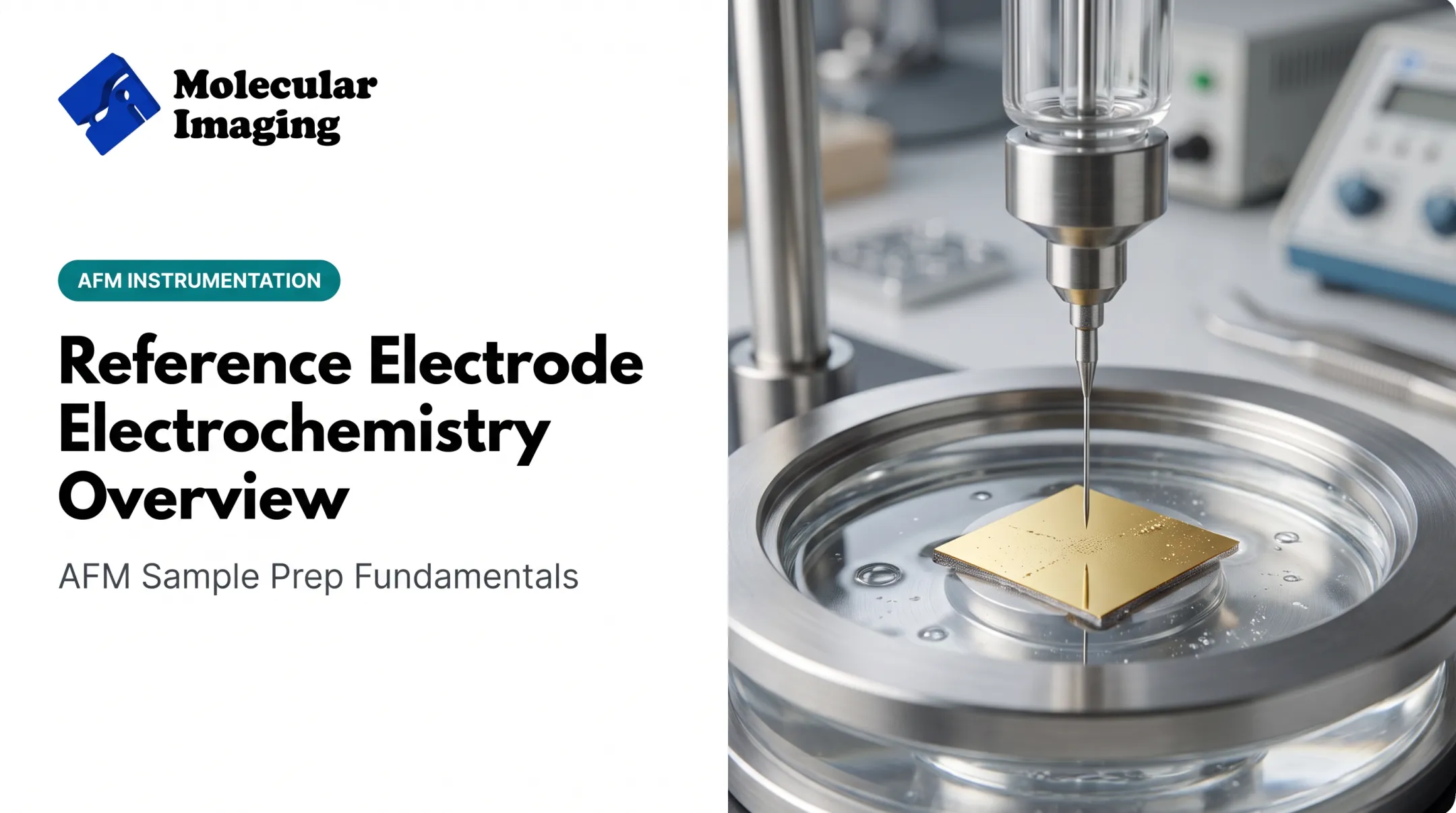
- Pseudo-reference electrode — A simplified RE alternative, such as a silver wire in bulk electrolyte. It needs calibration against an internal standard like ferrocene and can drift if contaminated, per Ossila's electrode guide.

Pseudo-reference electrodes appear mainly in specialized or space-constrained experiments where a full reference half-cell isn't practical.
Equipment Used in Electrolysis and Electrochemical Research
An electrolysis setup needs just four things: a power supply, two electrodes, an electrolyte solution, and a container or cell to hold it all. A classic classroom demonstration (brine electrolysis) uses carbon electrodes, a low-voltage DC power pack, and sodium chloride solution to produce chlorine gas at one electrode and hydrogen at the other.
Research-grade work demands more precision.
From Basic Setups to Precision Instrumentation
- Potentiostats/galvanostats act as the control hub, managing a three-electrode arrangement (working, reference, counter) and recording current or voltage response with high accuracy.
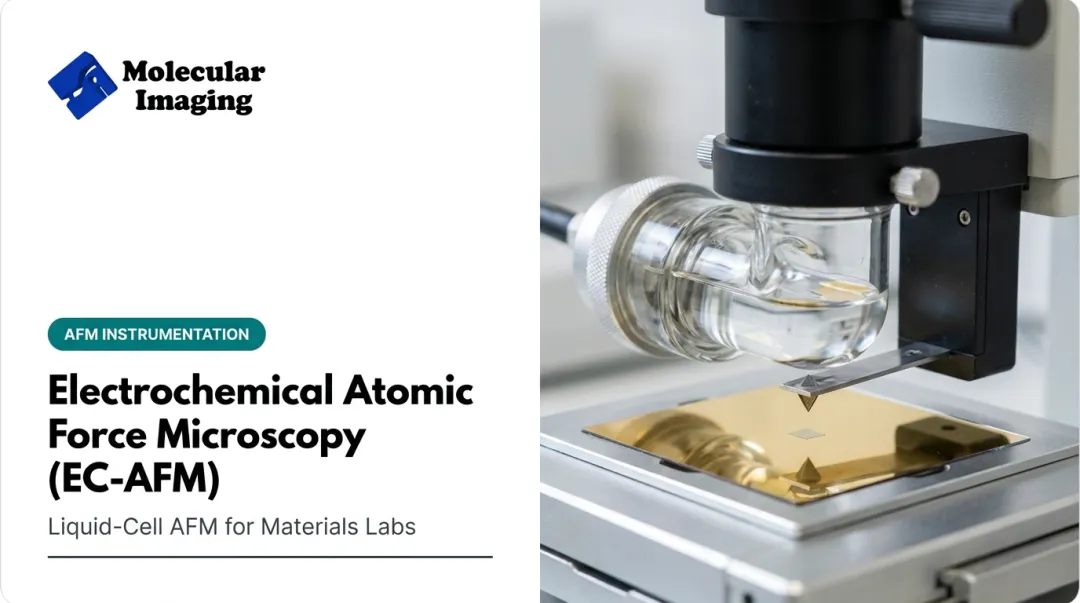
- Advanced AFM/STM systems allow researchers to image electrode surfaces at the nanoscale while electrochemical reactions happen in real time, something a standard potentiostat setup can't do alone.
- Environmental control accessories, like temperature-controlled stages and isolation chambers, stabilize conditions during long or sensitive runs.
For in-situ electrochemical imaging, Molecular Imaging's 5500 PicoPlus AFM/STM platform is built around that workflow:
- Integrated potentiostat compatibility
- Liquid-cell operation
- Modular nose-cone architecture that switches between AFM and STM
The 5420 PicoAFM supports electrochemistry and battery-interface studies, with selectable scan ranges of 9×9 µm or 90×90 µm.

For labs already running older Agilent 5500 or 4500 systems, Molecular Imaging's ZoomAFM service provides diagnostics, calibration, and remote troubleshooting to keep existing electrochemical setups running without a full replacement.
Applications of Electrochemistry Devices Across Industries
Electrochemistry devices span consumer electronics, energy systems, environmental monitoring, and hospital labs.
Energy storage and conversion:
- Lithium-ion batteries continue to dominate consumer electronics and EVs
- Fuel cells power forklifts, backup systems, and data center loads, per the Department of Energy
- Solid-state batteries are gaining traction for improved safety and energy density
Environmental and healthcare uses:
- Water treatment systems detecting pathogens and pollutants
- Biosensors identifying biomarkers in blood, sweat, and urine for diagnostics
- Wearable and continuous sensors tracking glucose and other metabolites in real time
Those commercial systems depend on research that can watch reactions unfold at the electrode surface. In-situ electrochemical AFM and STM give labs that view.
Research and Materials Science
In-situ electrochemical AFM and STM techniques let researchers watch battery interfaces, polymer films, and reactive surfaces change in real time. Studies have used electrochemical STM to observe solid-electrolyte interphase formation on lithium-ion battery anodes, directly imaging how the surface evolves during charge cycles.
This kind of imaging matters most for:
- University surface-science labs studying corrosion and deposition
- R&D teams characterizing battery and polymer interfaces
- Shared instrumentation facilities supporting multiple research groups
Molecular Imaging's Electrochemistry & Liquid Cell documentation includes a working example: Au(111) surfaces studied in a copper sulfate/sulfuric acid electrolyte, with clear voltammetry peaks at 0.278 V and 0.269 V versus a Cu/Cu²⁺ reference. That kind of documented, repeatable setup is exactly what shared facilities and battery-research groups need when configuring new instrumentation.

Frequently Asked Questions
What are electrochemical devices?
Electrochemical devices are instruments that use redox reactions to convert or measure electrical and chemical energy. Examples include batteries, electrochemical sensors, and electrolytic cells used for plating and refining.
What are examples of electrochemistry?
Common examples include car and smartphone batteries, fuel cells, electroplating processes, and corrosion on metal surfaces. Each relies on electron transfer between an anode and cathode.
What are the four main types of electrodes?
The four types are the working electrode (where the reaction occurs), the counter electrode (completes the circuit), the reference electrode (provides a stable potential), and the pseudo-reference electrode (a simplified, calibrated alternative).
What equipment is used in electrolysis?
Basic electrolysis requires a power supply, two electrodes, an electrolyte solution, and a container or cell. Research setups add potentiostats and precision monitoring equipment.
How do electrochemical AFM/STM systems support research?
These systems combine nanoscale imaging with real-time electrical measurement, letting researchers watch electrode surfaces change during live reactions. This supports work in molecular electronics, battery interfaces, and corrosion studies.