
Labs use it to study everything from lithium-ion aging to trace lead in drinking water. The global electrochemical instruments market was valued at $3,139.9 million in 2021, with a projected 5.3% CAGR through 2030 — a signal of how central these techniques have become across materials science, corrosion engineering, and molecular electronics.
This guide breaks down the main methods, how they work, and where nanoscale imaging fits into the picture.
Key Takeaways
- Electrochemical analysis uses current, potential, or charge to expose reaction mechanisms and rates
- Pick the method by the data you need: concentration, kinetics, or surface behavior
- EIS and stripping voltammetry flag corrosion, coating failure, and trace contamination before damage is visible
- Pairing electrochemical methods with AFM/STM imaging lets researchers watch surfaces change in real time
What Is Electrochemical Analysis?
Electrochemical analysis studies redox reactions by measuring electrical properties: voltage, current, charge, or resistance. Instead of relying only on spectroscopy or chemical assays, it uses the electron transfer itself as the signal.
You'll find it applied across:
- Battery R&D and QC
- Corrosion and coatings testing
- Biosensing and diagnostics
- Molecular electronics and nanoscale device research
- Trace-metal and environmental analysis
Most controlled-potential techniques rely on a three-electrode system:
- Working electrode — where the reaction of interest happens
- Reference electrode — provides a stable potential baseline
- Counter (auxiliary) electrode — carries the current so the reference electrode isn't disturbed
This separation of roles is what allows precise potential control, and it's the backbone of nearly every method described below.

Why Electrochemical Analysis Is Critical for Research and Industry
Accurate electrical measurement translates directly into better material and process decisions. Corrosion alone illustrates the stakes: NACE's IMPACT study estimated global corrosion costs at roughly 3.4% of global GDP based on 2013 conditions (a benchmark based on 2013 conditions, not a current figure, but still a reminder of how much value is tied to catching degradation early).
Electrochemical methods deliver value that is hard to match with other techniques:
- Trace-level detection — ion and concentration measurement down to sub-microgram levels
- Reaction mechanism insight — kinetics data that informs material design
- Quality control — batteries, coatings, and electronic components checked non-destructively
- Early failure detection — degradation and corrosion identified before visible damage
- Nanoscale, in-situ observation — surface behavior studied while a reaction is actually happening
- Quantitative surface data — metrics physical inspection and bulk chemical tests cannot supply
A 2015 US Bureau of Reclamation study found that low-frequency EIS could detect coating degradation before any visible change occurred, showing how electrochemical data can flag a problem that would otherwise stay hidden until failure.

Key Electrochemical Analysis Methods
Different questions require different techniques. Concentration measurement, kinetics study, and surface characterization each call for a distinct approach, and picking the wrong one is one of the most common mistakes in electroanalytical work.
Potentiometry
Potentiometry measures potential differences at essentially zero current, governed by the Nernst equation. It's the basis for pH electrodes and ion-selective electrodes, where potential relates linearly to the logarithm of ion activity. Because it draws negligible current, it barely disturbs the sample, making it useful when you need equilibrium information rather than a forced reaction.
Voltammetry (Including Cyclic Voltammetry)
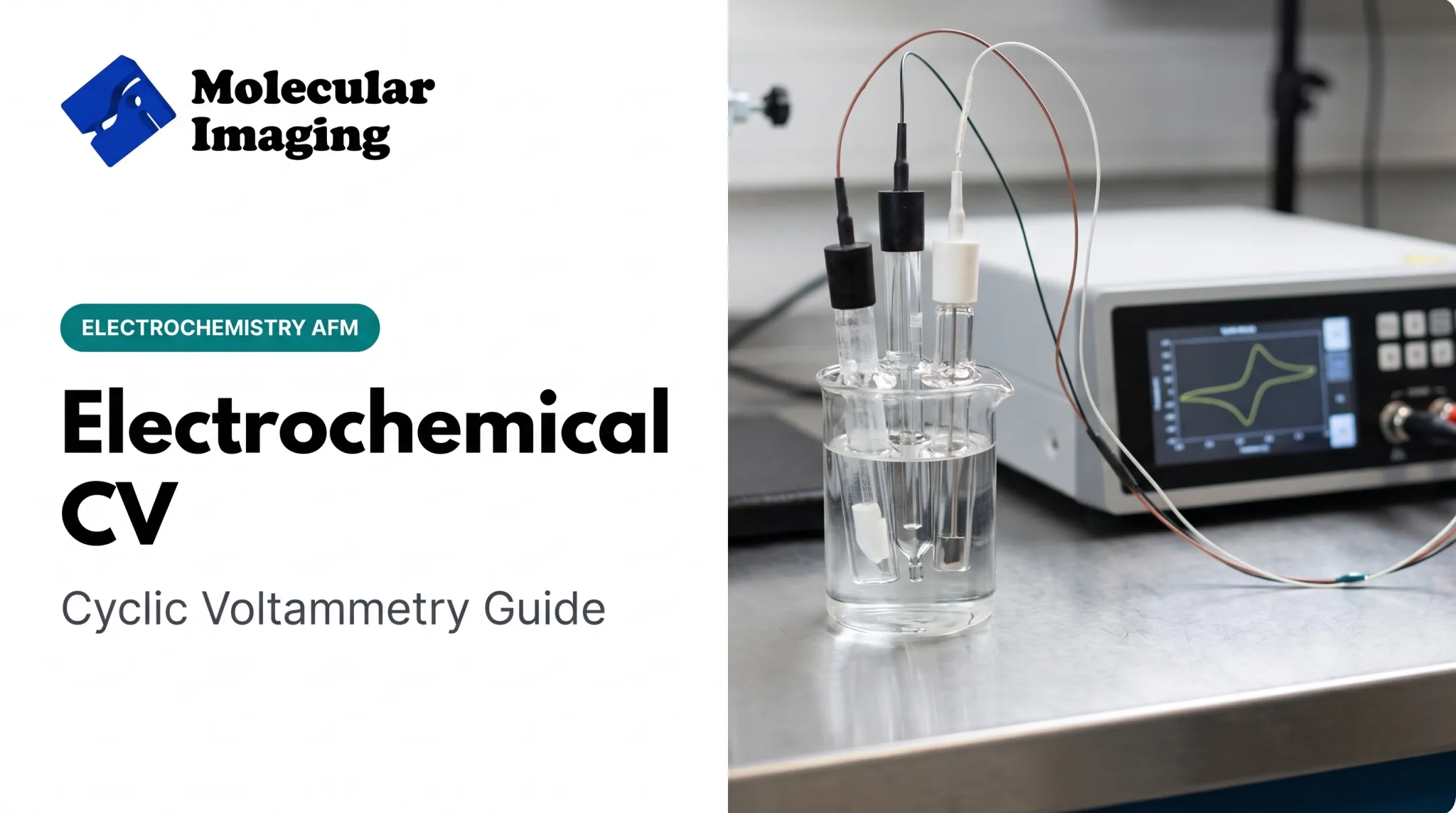
Voltammetry sweeps potential and measures the resulting current. Cyclic voltammetry, which sweeps forward and back, reveals reaction mechanisms and redox behavior.
Sensitivity can be striking with the right setup. A peer-reviewed study using anodic stripping voltammetry at a bismuth electrode reported detection limits of 105 ng/L for lead, 54 ng/L for cadmium, and 396 ng/L for zinc after a 180-second preconcentration step. That's not a universal benchmark. Waveform and electrode choice matter enormously, but the result shows what's achievable with proper method design.
Electrochemical Impedance Spectroscopy (EIS)
EIS applies a small AC signal across a frequency range and measures impedance. It's widely used for:
- Coating evaluation (water uptake, adhesion loss)
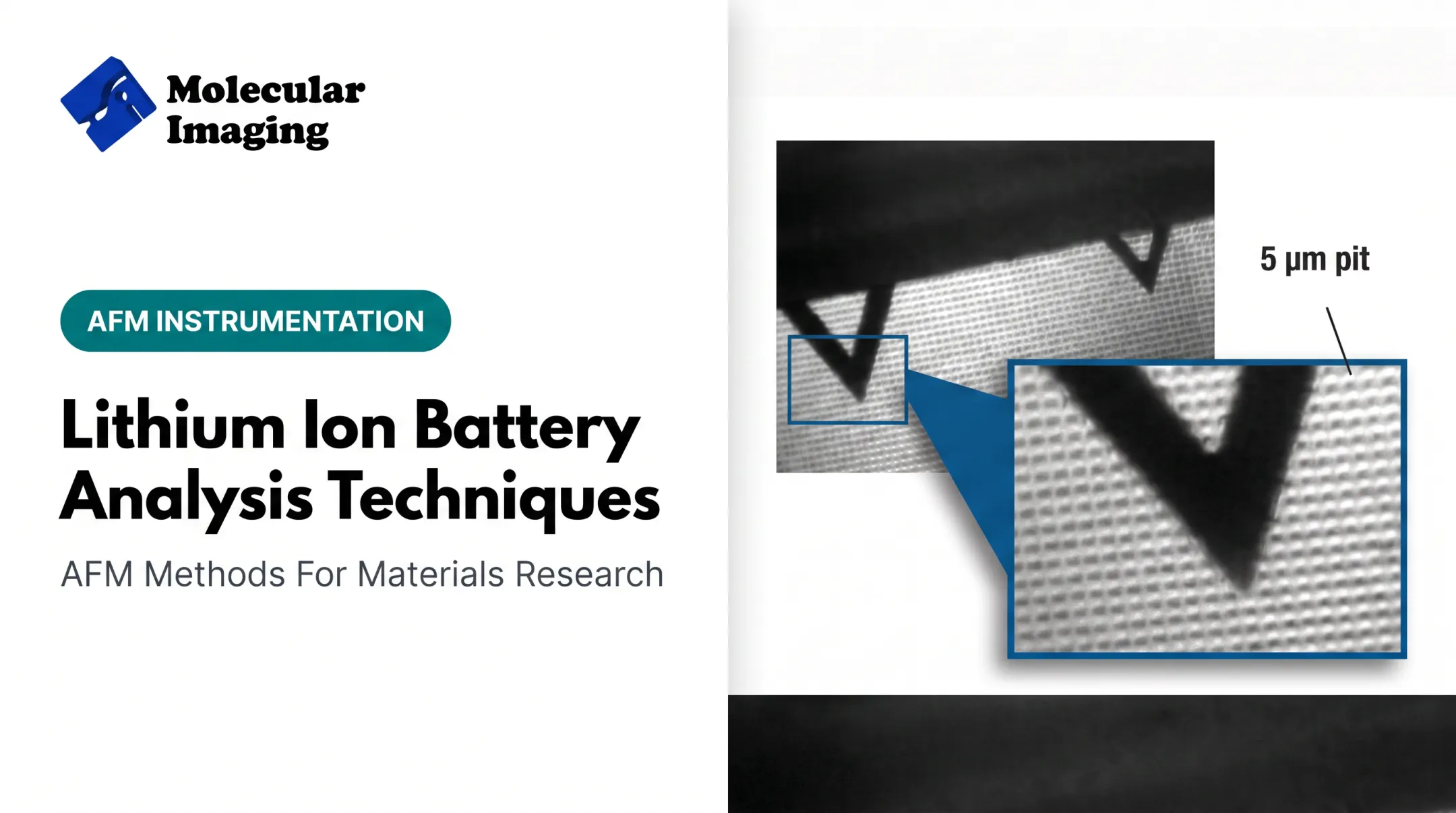
- Battery interface and aging characterization
- Corrosion monitoring
A 2025 review noted that EIS can help deconvolute overlapping kinetic, transport, and aging processes in lithium-ion batteries, including signatures linked to early lithium plating. Because it uses a small perturbation, EIS is often treated as non-destructive, though that depends on signal amplitude, not the method alone.
Amperometry and Coulometry
Amperometry measures current at a fixed potential; coulometry measures total charge passed. Both show up in practical, high-value applications:
- Amperometric biosensors: one ACS study reported detecting tear glucose at concentrations as low as 1.5 micromolar
- Karl Fischer titration: coulometric methods measure trace water content in liquids, with ASTM methods covering ranges up to 2.0% by mass
Emerging and Specialized Techniques
Two techniques stand out for surface-level insight:
- Electrochemical noise analysis: records naturally occurring current/potential fluctuations without imposing a polarization signal, useful for continuous corrosion monitoring
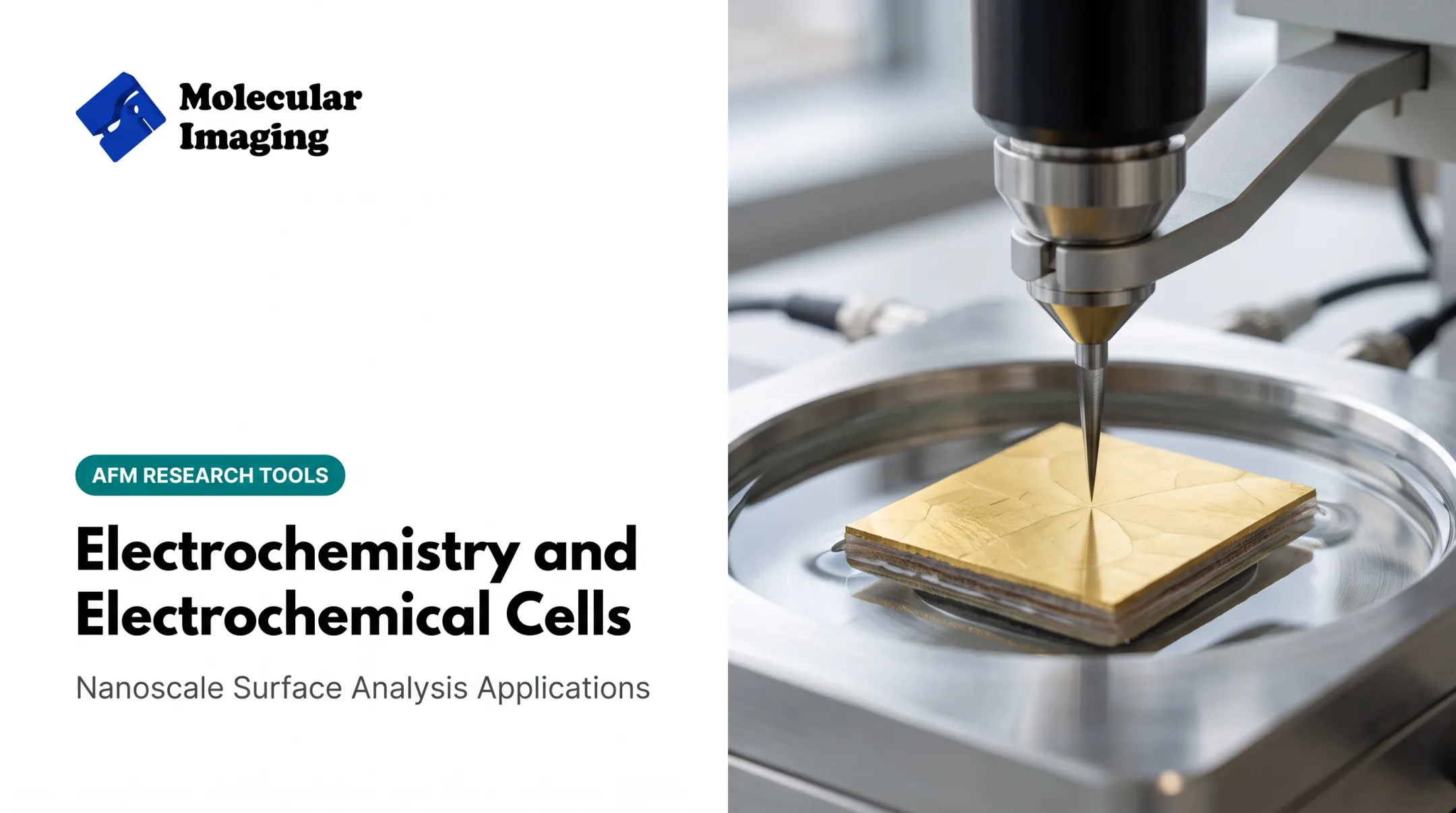
- In-situ EC-AFM/STM: combines imaging with electrochemical control, letting researchers watch surface structure change as a reaction proceeds

How Electrochemical Analysis Works – Step by Step
Skipping calibration or misreading noisy data are the two most common pitfalls in this workflow. Here's the practical sequence:
- Define the objective: Are you measuring concentration, studying kinetics, or characterizing a surface? This decision drives every choice that follows.
- Set up the electrochemical cell: Choose electrodes, electrolyte, and reference system matched to your sample and method.
- Apply the electrical signal: Decide whether potential or current is the controlled variable, based on your chosen technique.
- Collect and record data: Capture current, potential, or charge over time or frequency. Keep temperature and vibration stable; noise ruins delicate measurements.
- Interpret the data: Convert raw curves into meaning: voltammograms reveal peak currents and potentials, Nyquist plots reveal resistance and capacitance behavior.
- Validate and apply findings: Cross-check results against a complementary technique, such as imaging, before committing to a material choice or process change.

How Molecular Imaging Supports Electrochemical Nanoscale Research
Electrical measurements tell you that something changed at a surface. They don't always show you where or how. That's the gap that in-situ AFM and STM imaging fills, and where Molecular Imaging's instrumentation comes in. The 5500 PicoPlus AFM/STM Series is built for exactly this pairing. It supports in-situ electrochemical AFM and STM with liquid cells compatible with acidic, basic, and organic-solvent environments. That setup fits corrosion studies, lithium-ion battery interfaces, fuel-cell analysis, and electrodeposition work. Scan ranges of 9 μm × 9 μm and 90 μm × 90 μm cover both atomic-scale detail and larger-area surveys. Supporting hardware includes:
- Environmental isolation chambers for humidity, temperature, low-oxygen, and controlled-gas conditions
- Temperature-controlled stages operating from -30°C to 250°C
- Insulated Pt-Ir STM tips (PT-10), designed for electrochemical measurements and localized spectroscopy
- Conductive AFM cantilevers for simultaneous topography and electrical-property mapping For labs already running electrochemical AFM/STM setups, Molecular Imaging's technical documentation provides setup and calibration reference. Resources include an EC Manual and an electrochemistry-and-liquid-cell guide that references cyclic voltammetry on Au(111) in H₂SO₄/CuSO₄ electrolyte. When instruments need attention, ZoomAFM offers diagnostics, calibration, and both remote and on-site repair for existing Agilent 5500 and 4500 systems. Long-term electrochemical studies can keep running without extended downtime.

Frequently Asked Questions
What are the different types of electrochemical analysis methods?
The main categories are potentiometry, voltammetry, EIS, amperometry, and coulometry. Each targets a different measurement goal, from ion concentration to reaction kinetics to interface characterization.
Can you explain electrochemistry in a simple way?
Electrochemistry studies how electricity and chemical reactions interact, specifically how electrons transfer between substances. Measuring that electron flow reveals what's happening in a reaction.
What is the difference between potentiometry and voltammetry?
Potentiometry measures potential at essentially zero current, capturing equilibrium conditions. Voltammetry deliberately varies potential and measures the resulting current, revealing dynamic reaction behavior.
Is electrochemical analysis destructive to samples?
Most techniques, like EIS and linear polarization resistance, use small perturbations and are largely non-destructive. Others, such as potentiodynamic polarization, deliberately drive reactions and can alter the sample surface.
What industries rely most on electrochemical analysis?
Batteries, corrosion and materials science, electronics and semiconductors, and biosensing/life sciences all depend heavily on these techniques for R&D and quality control.
How does AFM/STM complement traditional electrochemical techniques?
Combining imaging with electrochemical measurement lets researchers watch surface structure change in real time during a reaction, connecting an electrical signal directly to a physical event at the nanoscale.